journal draft – photography
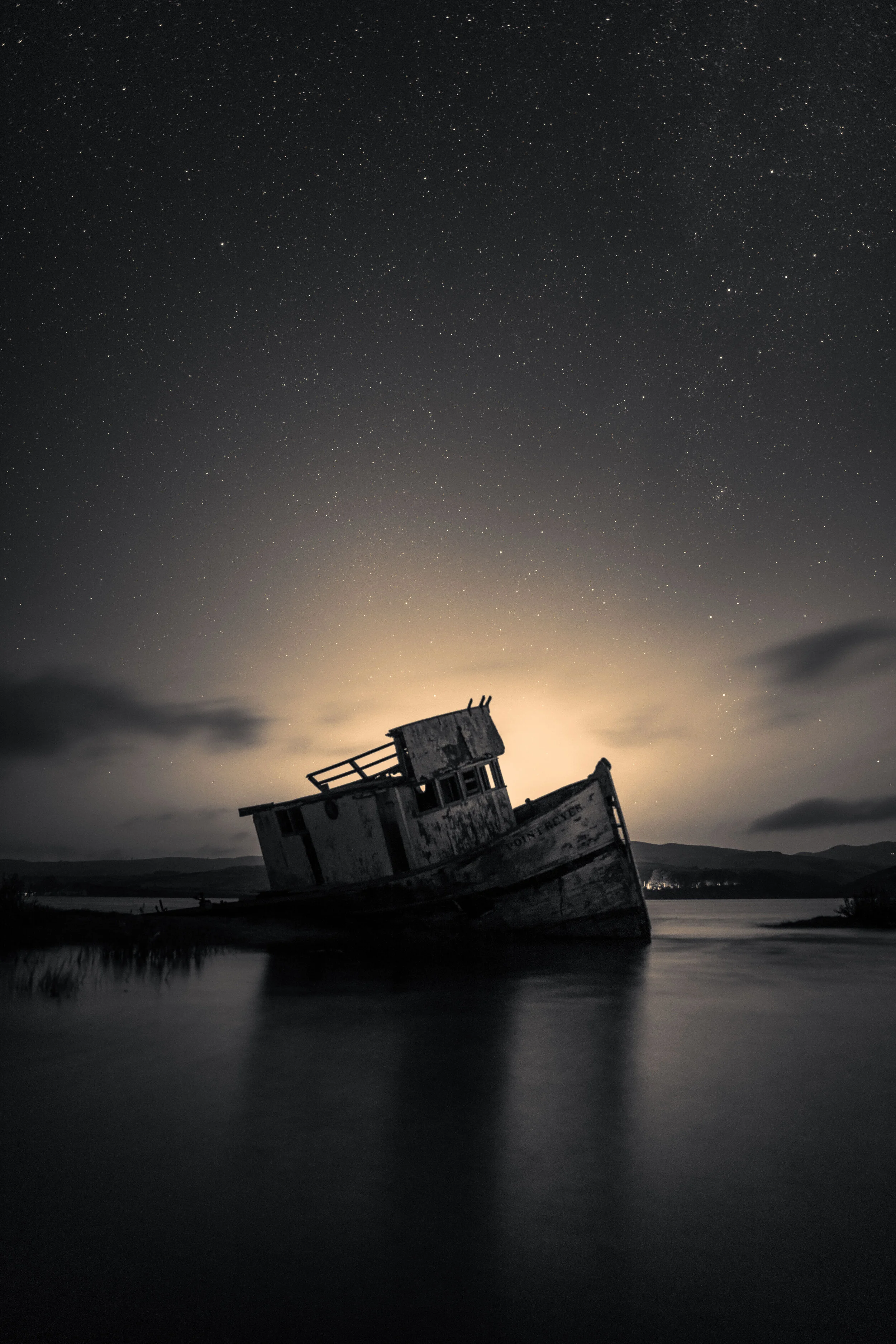
The first three times I attempted this, I arrived to a heavy mist that blanketed every location. I'd sit in my car, praying the same prayer I practiced right before opening my college results—and right after I asked a girl out the first time. “God, I don’t know if you exist, but if you do…” Glimpses of starlight pierce through the fog, giving grim hope that would soon be outshone. In a few hours, the moon would announce itself bright and large as ever, obscuring any further attempts to see the Milky Way—and the drive home would then begin. No god listening this time.
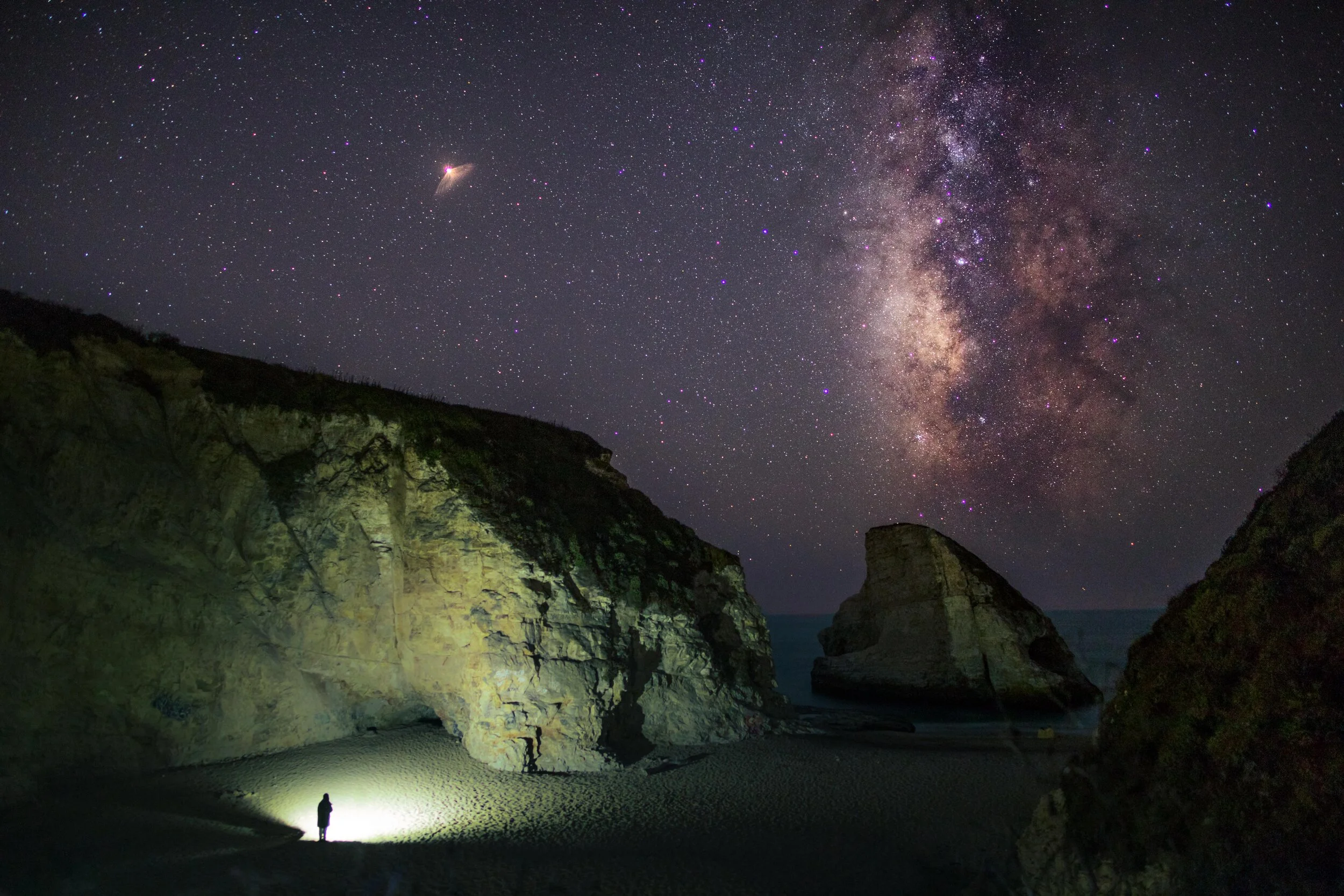
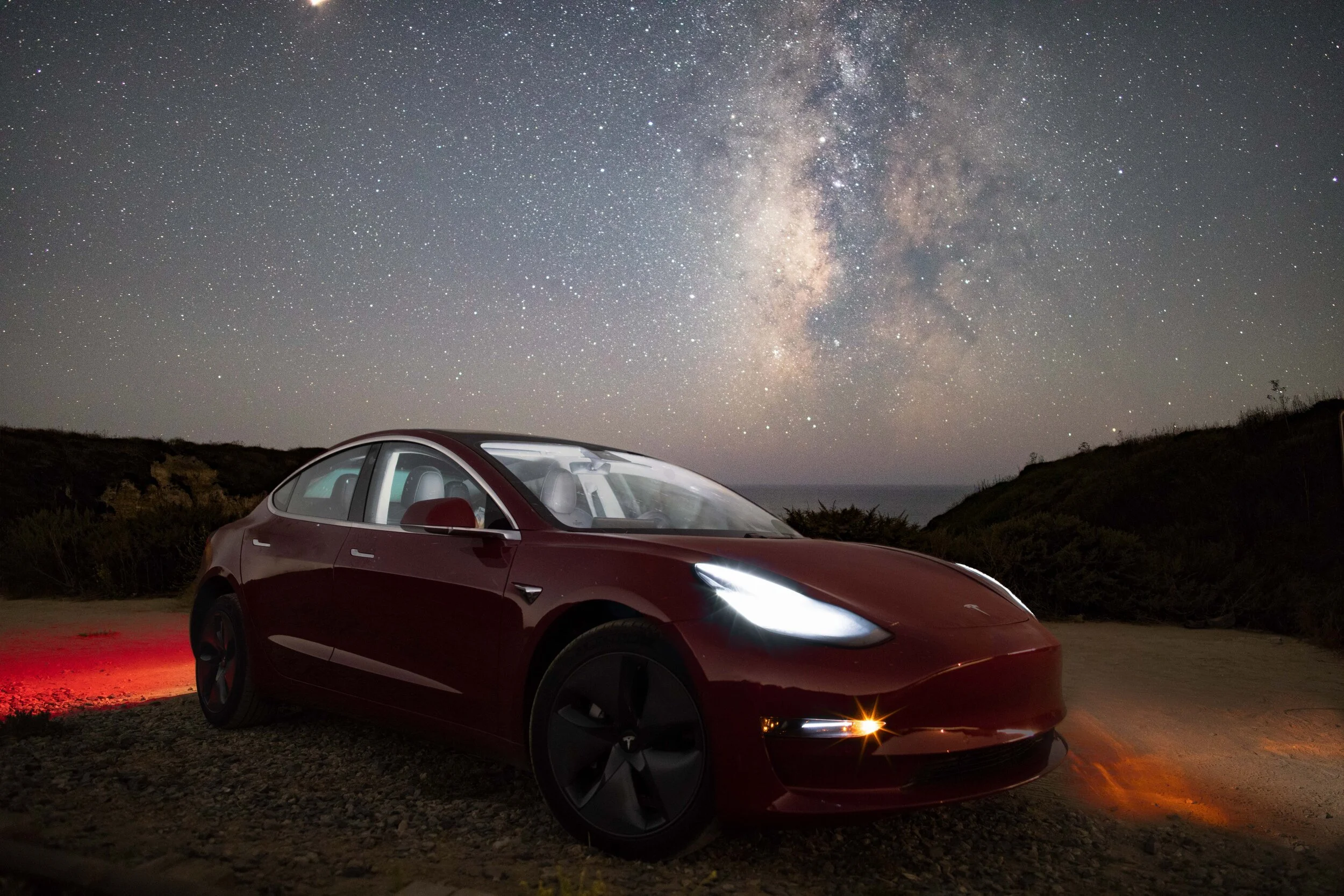
One of the most dangerous roads in California is State Route 17, which takes you from San Jose to Santa Cruz then to Big Sur. Its curves are sharp enough that specific turns take on their own monikers—“The Valley Surprise,” “Big Moody Curve,” and so on. This summer, I drove the road four times, all during the middle of the night. I was a wide-eyed young intern at Tesla, where my boss would sometimes lend me his Model 3 at the Palo Alto office. On 7pm on Fridays, I would choose, call, then pick up a surprised friend for a three hour journey to Big Sur, hoping to peek at the starry night, tripod in hand.
My brother considered this pursuit an example of (and I quote from my iPhone) “the only type of exercise u do. and it's a stupid one.” Friends worried for my safety when I told them of my plans, and their own safety when they decided to join. My mother—well, she didn't know about my idiocy, even with Find My Friends since no signal reached the places I ventured to. They were right. I wasn’t sure why I risked my life—and, far more dangerously, my boss’s Tesla—for unsuccessful pictures.
The last time I made this journey, I traveled alone. The radio stayed off, and it was the first time I drove to the sound of my thoughts and a humming road beneath, my photography equipment riding shotgun. The first time I touched any camera, it was for my parents. My memory of the moment remains blurry, but the image is clear: a young couple caught off-guard by their precocious 3-year-old, whose hands were barely larger than the buttons they pressed. There was a shutter, then some version of "I wonder what this does,” and a slow-motion opening of the camera latch, exposing all the unused film inside. My mother launched into tirades of anger. She pulled out Chinese proverb after Chinese proverb, realize I didn’t understand what half these words meant, then have to translate her anger into digestible, toddler-friendly phrases.
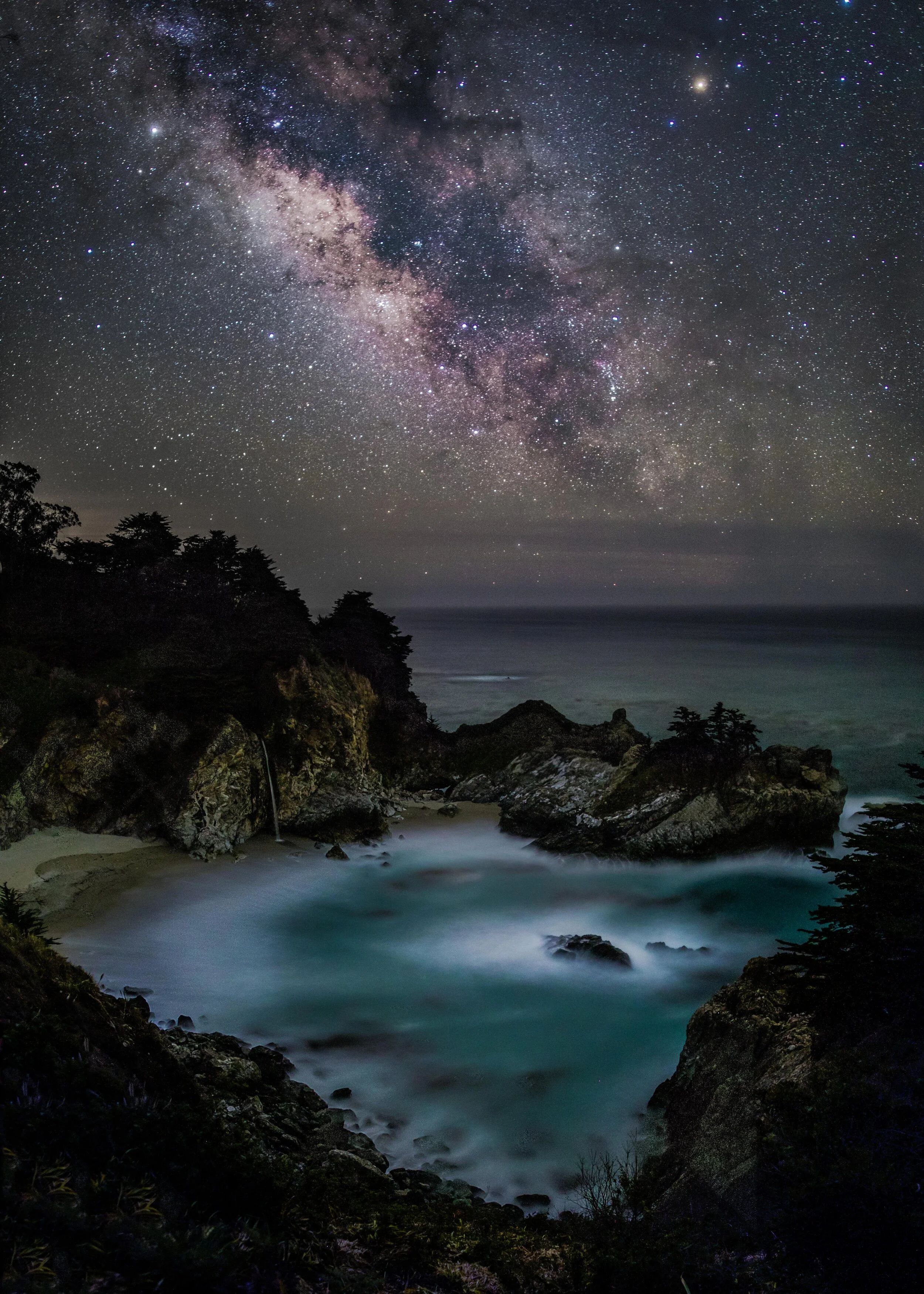
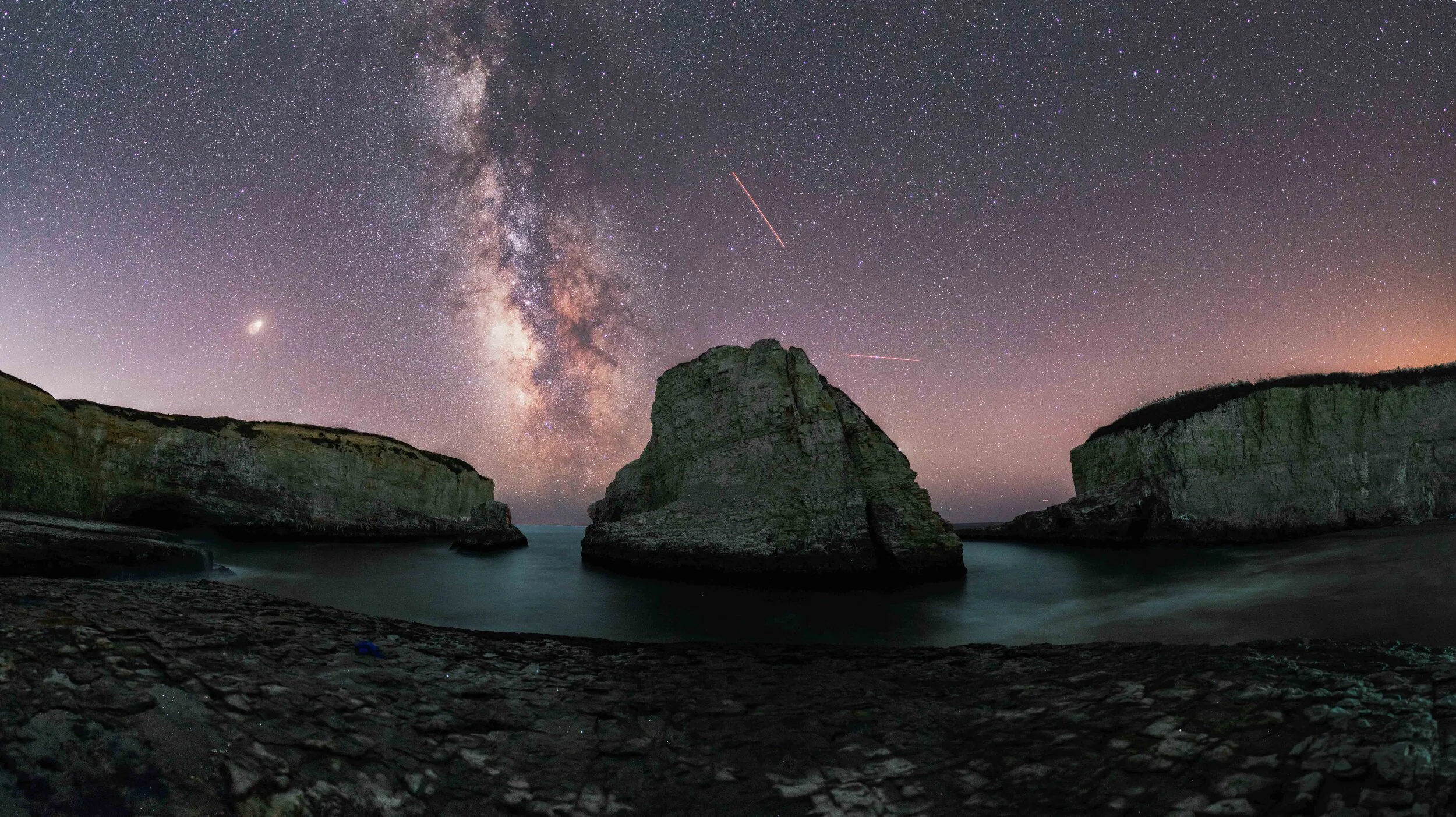
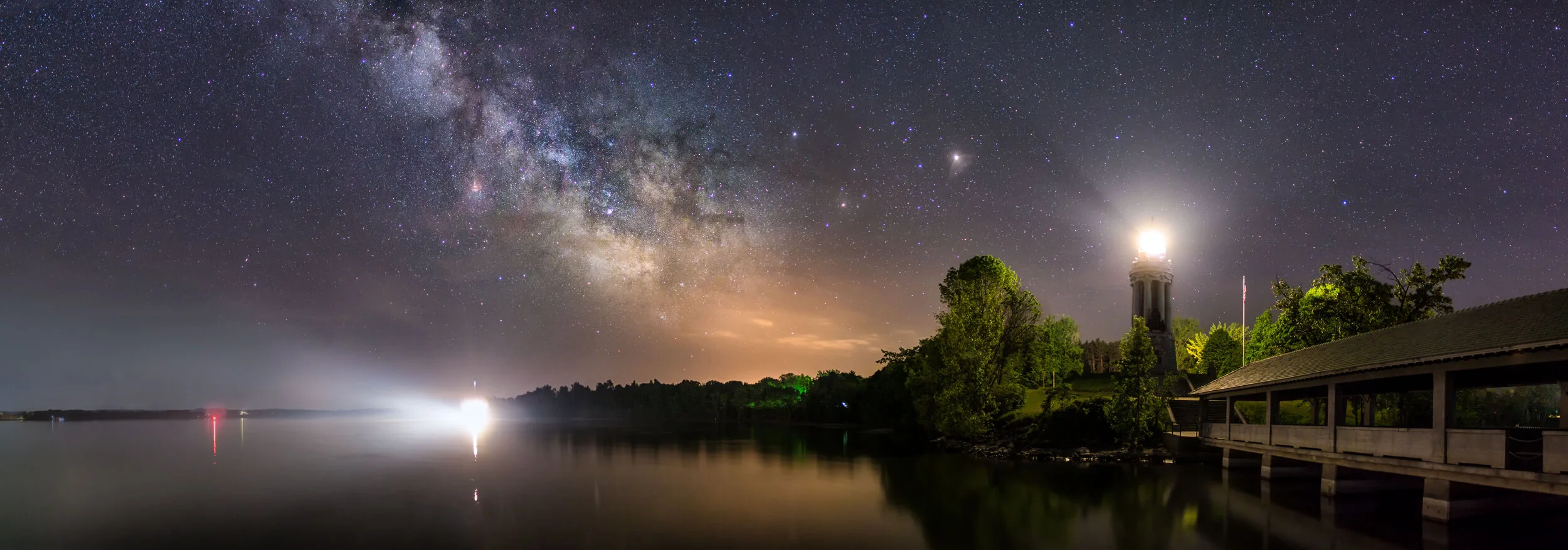
As I drove, I saw through my windshield that this fourth night, the mist disappeared. No fog this time. Stars lit a path down to a viewing deck I had scoped out two weeks prior. Setting up my tripod there felt like tiptoeing into god’s pantry: here, I was the intruder.
Standing there, awed by a view which shrunk my witness, I pondered that maybe this whole journey was an exploration into why mom got so mad that one day. We all have that instinct to respond to incredible moments by reaching for a camera, crystallizing events with a credibility that cries, “I was here for this!” Photography is a planned nostalgia. And our memories are time lapses: only what is changed is what is recorded. But photographs—they're different. They feel... more? More tangible, for sure. But also, more alive. It's like we take these pictures to prepare for that eventual sentiment, because in that little frame, god spins a separate world beneath stars that might just peek through.